💧 What Happens to Your Body When You Drink More Water?
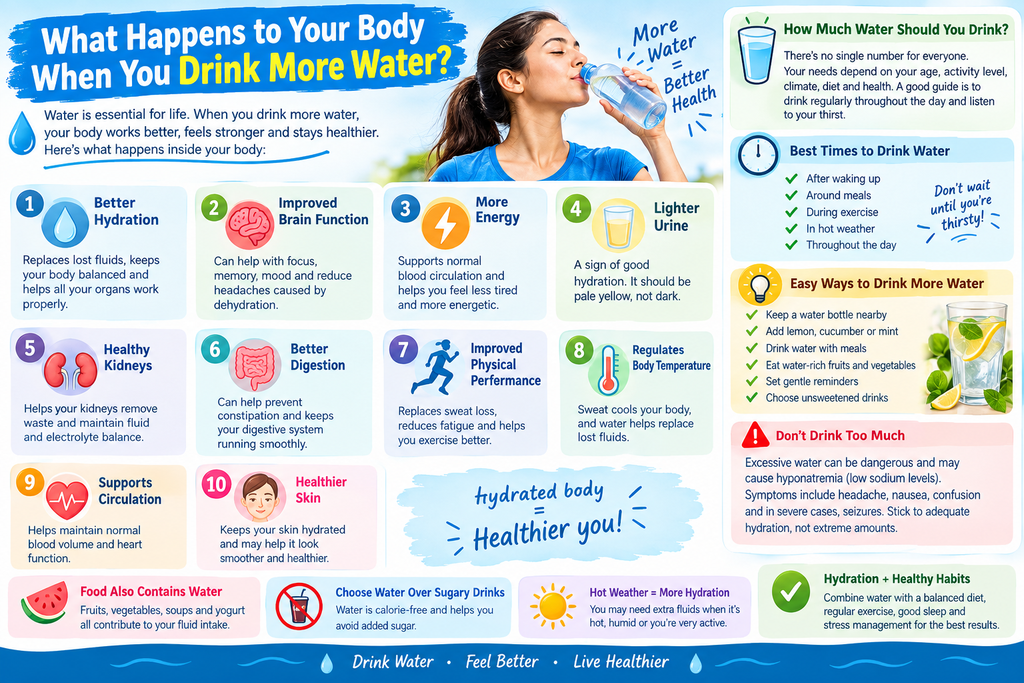
Water is one of the most important things your body needs to survive. Every cell, tissue, and organ depends on water to function properly. From regulating body temperature to supporting digestion and helping your body remove waste, staying hydrated plays an important role in everyday health.
Many people don’t drink enough water during the day. Increasing your water intake when you are thirsty or mildly dehydrated can help your body maintain normal functions and may improve how you feel.
But what actually happens inside your body when you start drinking more water?
Let’s take a closer look.
💧 1. Your Body Becomes Better Hydrated
The most obvious change is improved hydration.
Your body constantly loses water through urine, sweat, breathing, and other normal processes. Drinking fluids helps replace those losses and maintain the body’s fluid balance.
When you are adequately hydrated, your body has the water it needs for many essential processes.
Signs that you may need more fluids can include thirst, a dry mouth, tiredness, and darker urine. However, urine color can also be affected by foods, medications, and other factors.
🧠 2. Your Brain May Function Better
Your brain contains a large amount of water and depends on adequate hydration to function normally.
When you become dehydrated, you may experience symptoms such as:
- Headache
- Tiredness
- Difficulty concentrating
- Irritability
- Reduced alertness
Drinking enough water can help prevent dehydration-related problems and support normal mental performance.
If you are feeling tired or unfocused, especially after sweating or spending time in hot weather, getting enough fluids may help.
⚡ 3. You May Feel More Energetic
Dehydration can contribute to feelings of tiredness and weakness.
When your body has enough fluids, normal blood circulation and other physiological processes can operate properly. This can help you feel more comfortable and energetic, particularly if you were previously not drinking enough.
However, water is not a replacement for adequate sleep, nutritious food, or regular physical activity.
If persistent fatigue continues despite adequate hydration, it may have another cause.
🚽 4. Your Urine May Become Lighter
One easy way to observe hydration is to pay attention to your urine.
When you’re dehydrated, urine often becomes more concentrated and darker. As you drink enough fluids, urine may become lighter and more diluted.
However, completely clear urine all the time isn’t necessarily a goal. Urine color can naturally vary throughout the day.
The important thing is to maintain adequate hydration rather than forcing yourself to drink excessive amounts of water.
🫘 5. Your Kidneys Get the Fluid They Need
Your kidneys play a major role in maintaining your body’s fluid and electrolyte balance and removing waste products through urine.
Adequate fluid intake supports normal kidney function and helps your body produce urine.
Drinking enough water is particularly important when you are losing more fluid than usual through sweating, exercise, vomiting, or diarrhea.
People with certain kidney, heart, or other medical conditions may have different fluid requirements, so they should follow their healthcare professional’s advice.
💩 6. It Can Support Healthy Digestion
Water is an important part of the digestive process.
Adequate fluid intake can help support normal digestion and, together with enough dietary fiber, can help maintain regular bowel movements.
If constipation is related to inadequate fluid intake, increasing fluids may help.
For better digestive health, combine good hydration with fiber-rich foods such as:
- Fruits
- Vegetables
- Beans
- Lentils
- Oats
- Whole grains
- Nuts and seeds
Water alone isn’t a cure for every digestive problem, but it is an important part of a healthy lifestyle.
🏃 7. Your Physical Performance May Benefit
Water is especially important during physical activity.
When you exercise, your body can lose water through sweat. Losing too much fluid can contribute to dehydration, which may negatively affect physical performance and make exercise feel harder.
Drinking enough fluids before, during, and after exercise can help replace fluid losses.
How much you need depends on factors such as:
- Exercise intensity
- Exercise duration
- Temperature
- Humidity
- How much you sweat
- Your individual needs
During prolonged or intense exercise, electrolytes may also become important.
🌡️ 8. Your Body Can Regulate Temperature
Sweating is one of the body’s natural ways of cooling itself.
When you’re hot, your body produces sweat. As sweat evaporates from your skin, it helps remove heat.
But sweating also causes fluid loss.
Drinking enough fluids helps your body replace water lost through sweating and supports normal temperature regulation.
This becomes particularly important during hot weather, outdoor activities, and intense exercise.
❤️ 9. Water Supports Normal Circulation
Blood contains a large amount of water, and adequate hydration contributes to maintaining normal blood volume.
When you become significantly dehydrated, your body has to work harder to maintain normal circulation.
Staying adequately hydrated supports normal cardiovascular function, although drinking extra water beyond your body’s needs is not a treatment for heart disease or high blood pressure.
✨ 10. Your Skin May Look Less Dry
Water is important for the normal function of your skin and other tissues.
If you’re dehydrated, your skin may become dry or less comfortable. Correcting dehydration can help restore normal hydration status.
However, drinking extra water isn’t a guaranteed way to eliminate wrinkles, acne, or other skin conditions.
Healthy skin also depends on factors such as:
- Nutrition
- Sleep
- Sun protection
- Genetics
- Skin-care habits
- Overall health
🥤 How Much Water Should You Drink?
There is no single amount of water that is perfect for everyone.
Your fluid needs can vary depending on your:
- Age
- Body size
- Physical activity
- Climate
- Diet
- Pregnancy or breastfeeding status
- Health conditions
A useful approach is to drink regularly throughout the day and pay attention to thirst and other signs of hydration.
Remember that your total water intake comes from water and other beverages as well as water contained in foods such as fruits, vegetables, soups, and yogurt.
⏰ When Should You Drink Water?
Instead of trying to drink a huge amount at once, spread your fluid intake throughout the day.
You might drink water:
🌅 After waking up
A glass of water can be a simple way to start your day.
🍽️ Around meals
Water can be a healthy beverage choice with breakfast, lunch, and dinner.
🏃 During exercise
Drink according to your activity, thirst, and environmental conditions.
☀️ During hot weather
You may need more fluids when you’re sweating more.
🌙 Throughout the day
Keep water available so you can drink when thirsty.
🍋 Easy Ways to Drink More Water
If you find plain water boring, try making hydration more enjoyable.
You can:
- Keep a reusable water bottle nearby
- Add lemon or lime
- Add cucumber or mint
- Drink water with meals
- Eat water-rich fruits and vegetables
- Set gentle reminders to drink
- Choose unsweetened drinks more often
Replacing sugary drinks with water can also reduce your intake of added sugar.
⚠️ Can You Drink Too Much Water?
Yes. More water is not always better.
Drinking an excessive amount of water in a short period can cause a dangerous condition called hyponatremia, in which the sodium concentration in the blood becomes too low.
Symptoms can include headache, nausea, confusion, and in severe cases, seizures or loss of consciousness.
You generally don’t need to force yourself to drink enormous amounts of water. The goal is adequate hydration, not maximum hydration.
If you have been told to restrict fluids because of a medical condition, follow your healthcare professional’s instructions rather than general hydration advice.
💧 Water vs. Sugary Drinks
Water is naturally free of calories and sugar.
Regularly replacing sugary drinks with water can be a simple way to reduce added sugar consumption.
For example, instead of frequently drinking:
- Sugary soda
- Sweetened energy drinks
- Very sweet tea
- Sugary flavored beverages
you can choose water more often.
This doesn’t mean you can never enjoy other beverages. It’s about making water your regular hydration choice.
🥒 Don’t Forget That Food Contains Water
You don’t get all your fluids from drinking glasses of water.
Many foods contain significant amounts of water, including:
- Watermelon
- Cucumber
- Oranges
- Strawberries
- Tomatoes
- Lettuce
- Soups
- Yogurt
Eating a varied diet can therefore contribute to your overall fluid intake.
🌞 Hydration Is Especially Important in Hot Weather
People living in hot and humid environments may lose more fluid through sweating.
On particularly hot days, you may need to pay extra attention to hydration.
If you’re spending a lot of time outdoors, exercising, or working physically, take regular opportunities to drink fluids and avoid prolonged exposure to extreme heat when possible.
Symptoms such as severe weakness, confusion, fainting, or signs of heat illness require urgent medical attention.
🧠 Common Water Myths
Myth 1: Everyone must drink exactly eight glasses a day.
Not necessarily. Fluid requirements vary from person to person, and water also comes from food and other beverages.
Myth 2: More water always means better health.
No. Adequate hydration is important, but excessive water consumption can be dangerous.
Myth 3: Drinking water automatically causes weight loss.
Water can be useful when it replaces high-calorie sugary drinks, but drinking extra water alone does not guarantee weight loss.
Myth 4: You need to drink only plain water.
No. Other beverages and water-rich foods also contribute to total fluid intake.
🥗 Combine Hydration With Healthy Habits
Drinking enough water is just one part of a healthy lifestyle.
For better overall health, combine good hydration with:
- A balanced diet
- Regular physical activity
- Adequate sleep
- Stress management
- Limited sugary drinks
- Plenty of fruits and vegetables
- Healthy sources of protein
- Whole grains and fiber-rich foods
Small healthy habits practiced consistently can make a bigger difference than extreme changes.
❤️ Final Thoughts
Water is essential for life, and staying adequately hydrated supports many important functions throughout the body.
When you drink enough fluids, your body can maintain normal hydration, support temperature regulation, digestion, circulation, kidney function, and physical performance.
However, you don’t need to force yourself to drink excessive amounts of water.
The goal is simple: drink regularly, respond to thirst, replace fluids lost through activity and heat, and choose water frequently throughout the day.
💧 Stay hydrated, eat nutritious foods, stay active, and listen to your body.